Movies and television shows often imagine futuristic ideas, but some have come remarkably close to real-world events. From global pandemics and cybercrime to advanced technology and space exploration, certain fictional stories now feel surprisingly accurate. While these productions were created for entertainment, many of their concepts later echoed actual developments. Here are seven films and shows that appeared to predict the future in unexpected ways.
Armageddon (1998)
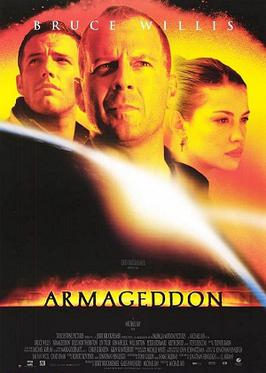
Armageddon imagined a world where humanity must stop a massive asteroid from threatening Earth. The action-packed story popularized the idea of planetary defense long before it became a real scientific priority.
Years later, NASA launched its first asteroid deflection mission to test methods of protecting Earth from potential space threats. Although the real mission was based on science rather than Hollywood drama, it reminded many viewers of the film’s central concept.
Contagion (2011)
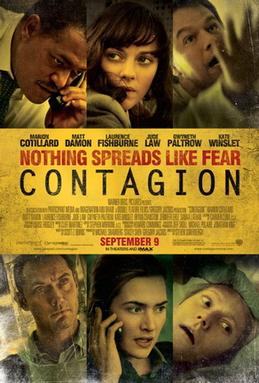
Steven Soderbergh’s Contagion follows the rapid spread of a deadly virus that begins overseas before becoming a worldwide health crisis. The film also explores quarantines, scientific research, and the race to develop a vaccine.
After the COVID-19 pandemic, many scenes from the movie felt surprisingly realistic. Its detailed portrayal of public health responses and global disruption led audiences to revisit the film with a new perspective.
Outbreak (1995)
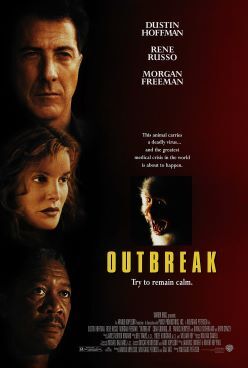
Outbreak tells the story of a dangerous virus that quickly spreads beyond its place of origin, forcing authorities into an urgent effort to prevent widespread disaster. The movie focuses on both medical challenges and government decision-making during a public health emergency.
Although the virus itself is fictional, the themes of containment, emergency planning, and scientific cooperation became increasingly relevant in later years. The film remains one of Hollywood’s most memorable medical disaster stories.
1984 (1984)
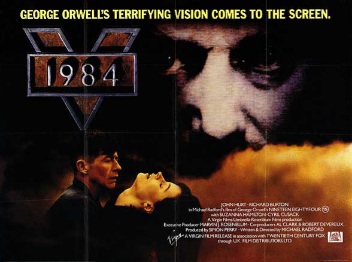
Based on George Orwell’s famous novel, 1984 presents a society where constant surveillance and government control shape everyday life. Citizens live under continuous observation while privacy becomes almost nonexistent.
Modern debates surrounding digital surveillance, data collection, and national security have often drawn comparisons to the story. While today’s world differs in many ways, the film’s warnings about personal freedom continue to spark discussion.
Hackers (1995)
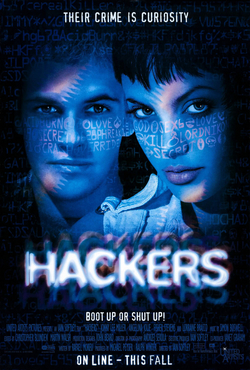
When Hackers premiered in 1995, home internet access was becoming more common, but computer crime was already a recognized concern. The United States had enacted federal computer-crime legislation in the 1980s, and incidents such as the 1988 Morris Worm had demonstrated the vulnerability of connected systems.
Rather than predicting the existence of cybercrime, the film offered a highly stylized portrayal of an emerging digital culture. Its themes of network security, corporate hacking and online identity later became increasingly relevant as the internet expanded into everyday life.
Minority Report (2002)
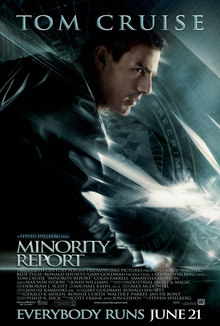
Minority Report introduced audiences to advanced gesture-controlled computer interfaces and predictive policing technologies. Its futuristic world blended artificial intelligence with interactive digital displays that seemed impossible at the time.
Many of the interface concepts later influenced real technology, including touchless controls and motion-based computing systems. Although predictive crime prevention remains fictional, parts of the film’s technology have become reality.
Game of Death (1978)
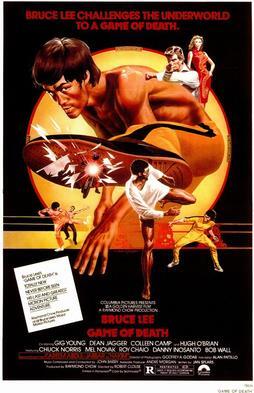
Game of Death became notable not only for Bruce Lee’s surviving performance footage but also for its unusual production history. Lee died in 1973 before completing his original version of the film. The edition released in 1978 combined his existing footage with newly filmed scenes, stand-ins and archival material.
The completed film includes a scene in which an actor is shot on a movie set after a real bullet is substituted for blanks. In 1993, Lee’s son Brandon was fatally injured in a prop-gun accident while filming The Crow. The disturbing resemblance is generally regarded as a tragic coincidence involving the posthumously completed version of Game of Death, not as a prediction of Brandon Lee’s death.
Featured Image Source: https://en.wikipedia.org/w/index.php?curid=10002304